March 23, 2026
Inside LGA South Australia’s partnership with the NESP Climate Systems Hub
For South Australia’s climate adaptation practitioners, few people sit as centrally as Andrew Nesbitt, Central Coordinator of the Regional Climate Partnerships Program at LGA South Australia. Acting as a connector, convener and knowledge broker himself, Andrew draws heavily on trusted relationships and credible science to support councils and practitioners across the state. For him, the NESP Climate Systems Hub plays a key role in that ecosystem.
Finding trusted information … and trusted people
Andrew first encountered the NESP Climate Systems Hub formally through his involvement in the 2023 National Climate Adaptation Conference working group. It was there that the hub stopped being “just a website” and became a network of real people: researchers, knowledge brokers and collaborators he came to know by name.
What stood out to him was not just the quality of the science, but the credibility and openness of the people behind it. Andrew recounts meeting long-standing adaptation experts like Jean Palutikof, reconnecting with colleagues he’d known through NCCARF, and building relationships with Sarah Boulter, Brad Murphy, and Jon Barnett enabled him to recognise the hub as a reliable source.
“NESP is the information, but it’s the people behind the information that make it trustworthy.”
Those relationships laid the foundation for deeper collaboration.
Building capacity together: the two-day climate risk course
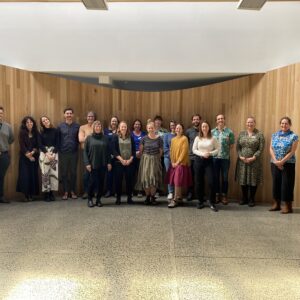
One of the most significant touchpoints Andrew describes was co-convening a two‑day climate information for decision-makers management training, developed and delivered by the hub’s experts. When the hub sought practitioners to trial a new set of training resources, Andrew opened the doors to the South Australian local government network … and they came.
The course brought together local government staff for hands‑on learning in:
- climate science foundations
- adaptation pathways
- best‑practice risk frameworks
- practical exercises guided by national experts.
Participants left not just better informed but energised. For many, it was their first real interaction with the hub, and it left a lasting impression.
“Together with our local Knowledge Broker from the Department for Environment and Water, we recognised the importance of engaging a select group of council officers. This initiative marked a pioneering effort in South Australia, as the content was co-designed with the Climate Systems Hub team, DEW, and LGA, ensuring its relevance and practicality for participants within their specific roles and organisations. The training addressed a significant gap in local government and broader governance structures by providing cutting-edge scientific insights, risk approaches, and adaptation strategies in a format tailored to everyday decision-making.”
From that workshop, Andrew helped establish a local Climate Risk Community of Practice, which still meets today. That enduring legacy is, in his view, one of the strongest examples of knowledge translation turning into real‑world capability.
Sharing knowledge across the state
As part of his coordination role, Andrew also ensures that updates and resources from the NESP Climate Systems Hub reach the wider local government practitioner network. Through LGA South Australia’s newsletters and email groups, he shares hub outputs, tools, and opportunities with councils and practitioners who rely on timely and credible information.
He sees this ongoing flow of information as an essential part of keeping South Australia connected to national science.
A collaborative future
Whether through training, Communities of Practice, conferences, or informal conversations, Andrew’s engagement with the hub is grounded in shared purpose. He sees the NESP Climate Systems Hub as a partner in helping councils and practitioners navigate climate risk, a place where credible science meets genuine collaboration.
As Andrew puts it, the impact of the hub isn’t only the datasets, tools or resources it produces. It’s the relationships, the knowledge exchange, and the people who make climate science accessible and usable for communities across the state.