March 31, 2026
Climate College is an early-career professionals program established by the Climate Systems Hub to foster and support the next generation of climate scientists and climate change adaptation experts. The program brings together research students, early career scientists, and adaptation practitioners working across the climate space, creating opportunities to build skills, share knowledge, and develop meaningful professional networks.
Climate College on the Road forms part of this program, and our 2026 trip took participants into the regions around Marysville and Healesville in Victoria. The field trip goal was simple: to understand how climate science and adaptation practices are being used in real-world decision-making.
Throughout the field trip, participants met with Traditional Owners, conservation practitioners, water managers, researchers and tourism operators. Each visit revealed a different perspective on how climate change shapes land, ecosystems, and livelihoods.
Learning from place
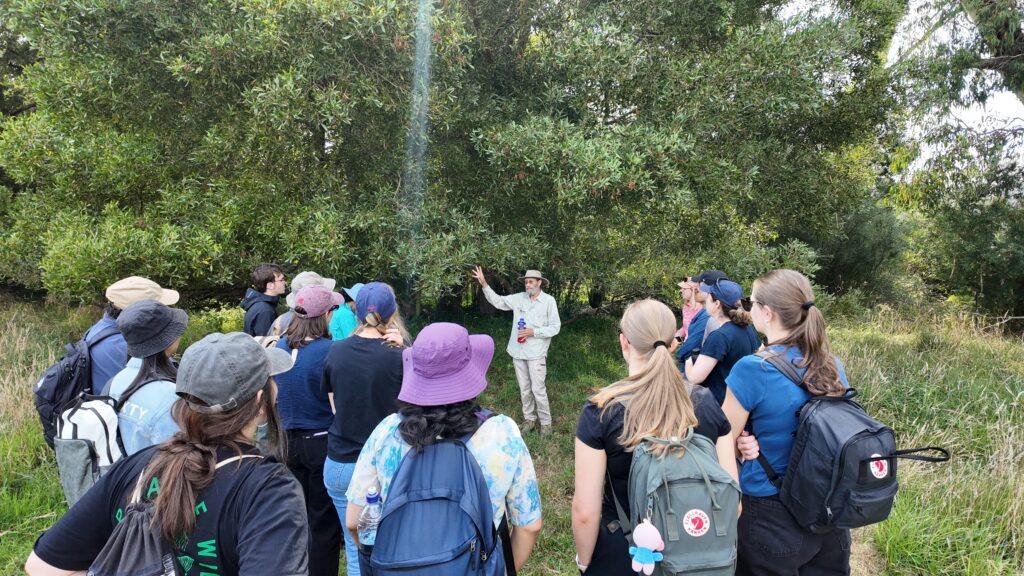
The first stop was at Coranderrk Wandoon Estate Aboriginal Corporation, where Uncle Dave Wandin spoke about the importance of local climate knowledge when performing cultural practices such as cool burning and other land management techniques. His insights highlighted that caring for Country is deeply connected to understanding local climate patterns. A stronger, shared understanding between governments, communities, and Traditional Owners will be essential to protecting land from future climate risks.
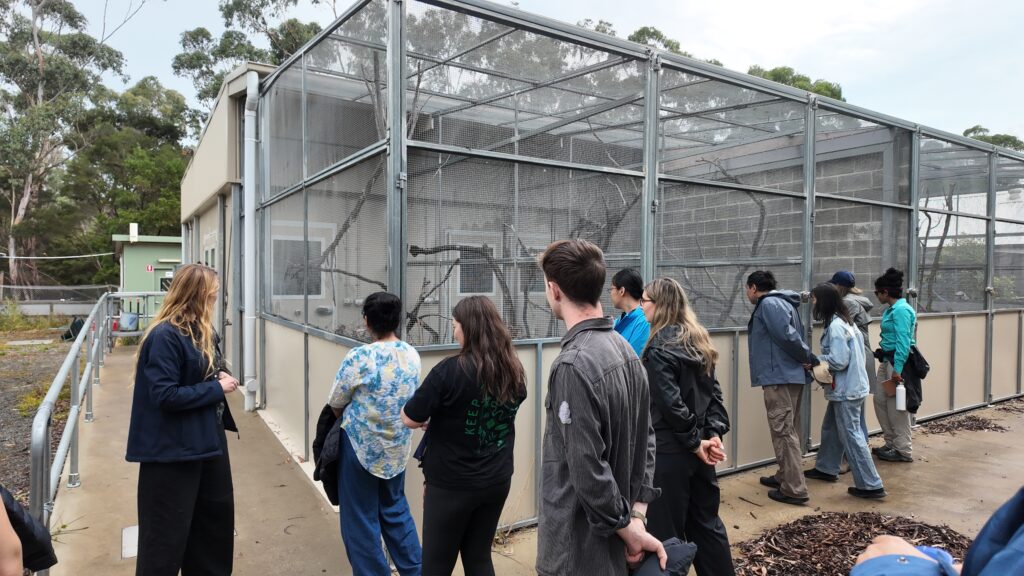
The importance of climate information came through just as strongly at Healesville Sanctuary, part of Zoos Victoria. For the Threatened Species Program, climate change is already placing significant pressure on vulnerable species, such as the Leadbeater’s possum. Reliable climate information is essential for understanding long-term habitat suitability and potential migration pathways in a warming world. At the same time, sanctuary staff stressed the importance of day-to-day weather information, that underpins their emergency and evacuation planning during extreme weather events.
Similar challenges are emerging at the Snobs Creek Hatchery, where the Victorian Fisheries Authority is developing a new conservation program. Changing climate conditions are already affecting both natural and managed waterways. Increases in water temperature, drops in oxygen levels, and black water events can kill fish quickly. When combined with existing pressures from recreational fishing and land use changes, these changes risk higher fish mortality and disruptions to breeding cycles. Understanding and responding to these climate-driven changes is becoming increasingly urgent.
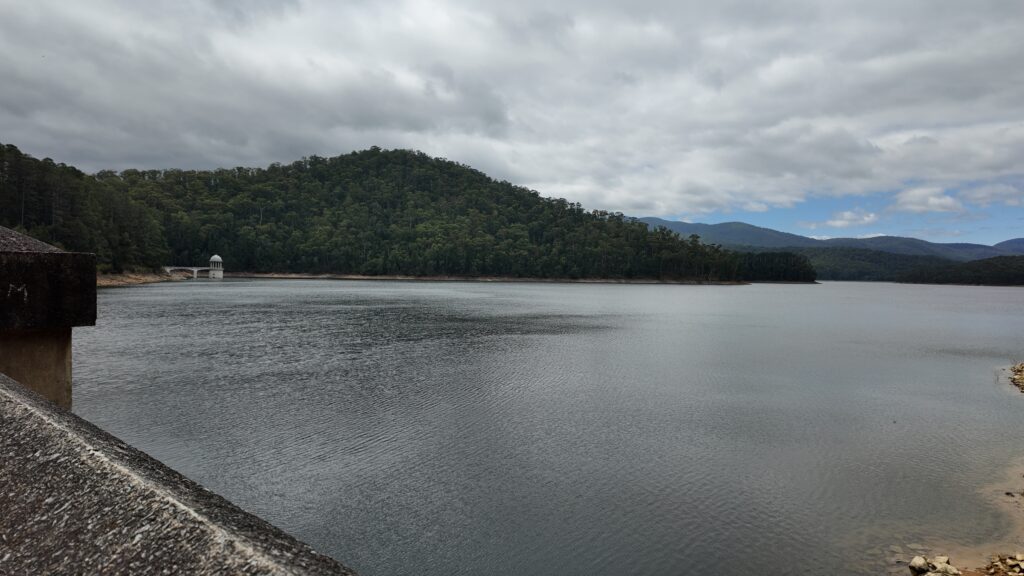
Water management brought another layer of complexity. At Maroondah Reservoir, Melbourne Water explained how climate science underpins long-term planning and decision-making. With population growth and the likelihood of more frequent and prolonged droughts, future water scarcity is a growing concern. Accurate climate modelling is therefore central to understanding how changing rainfall and inflows will shape Melbourne’s water supply for generations to come.
The governance challenges behind these decisions were explored further with Dr Elissa Waters from Monash University. She highlighted the tension between responding to community needs and navigating political and resource constraints. Risk-averse decision-making, often shaped by concerns about public backlash, can delay action, leaving the most affected communities waiting for solutions.
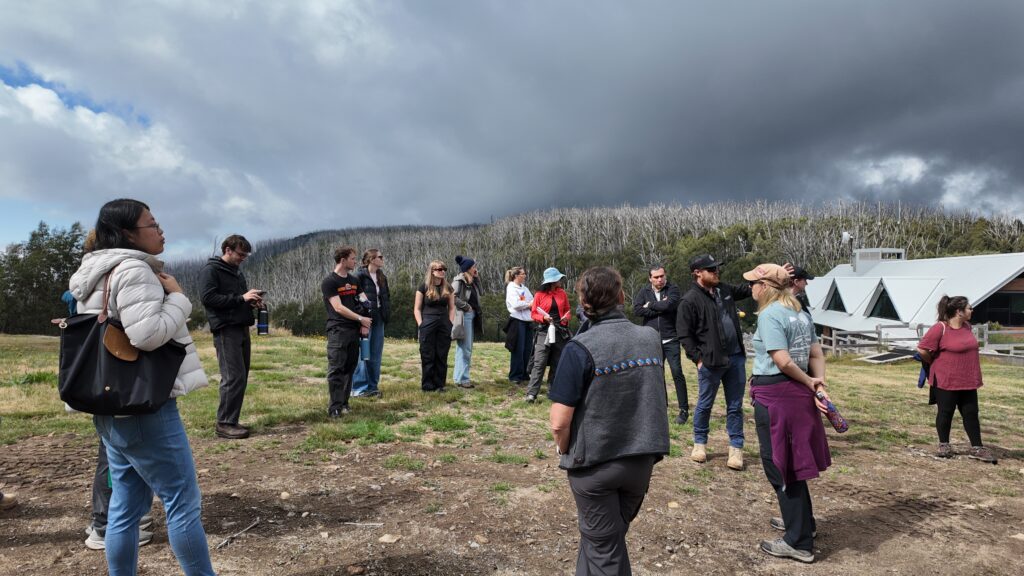
Climate impacts are also front and centre in Victoria’s alpine regions. At Lake Mountain Resort, participants heard from Alpine Resorts Victoria, how operations are increasingly shaped by changing snowfall patterns. Reliable snow seasons are critical for tourism, yet annual variability has increased. Resort managers are adapting by expanding snowmaking, moving and storing snow, and closely tracking weather conditions. These decisions depend on continuous climate monitoring and information, and improved climate forecasting is essential for knowing when and where to deploy snow-making equipment to remain viable.
Together, these visits highlighted how climate change is already influencing decisions across conservation, water, tourism and land management, often in very practical and immediate ways.
Bridging the climate knowledge gap
A recurring theme throughout the trip was a clear “knowledge gap”. This was not simply about missing information, but about matching the climate science being produced and what practitioners actually need.
Encouragingly, many hosts were already deeply engaged with climate information. In several cases, it is part of everyday decision-making, shaping and planning their risk management and long-term strategy. This reinforces the real-world value of climate research, but it also makes gaps more visible.
Some gaps are scientific. Several organisations expressed the need for skilful climate outlooks beyond six months to inform high-stakes decisions, such as when conditions might be suitable to release endangered species back into the wild, something that is not yet reliable or achievable. These needs highlight important frontiers for future research.
Other gaps are more practical than technical. A recurring issue was communication and usability: scientists and practitioners often do not “speak the same language”, and tools designed for research do not always align with operational needs. At Healesville Sanctuary, for example, climate projections are used to model future habitat for the Leadbeater’s possum. The team relied on a climate product specifically designed for ecological applications—one that integrated easily with existing workflows and could be readily “picked up and played with”. Although more sophisticated regional climate models were available, they were harder to access, less compatible with ecological tools, or required specialist knowledge to implement. As a result, a more user‑friendly but less optimal dataset was used, not because it was the latest science available, but because it was the most usable for on‑the‑ground decision‑making.
Participants also reflected on differences between the climate variables most important for operations and those typically emphasised in climate analyses, noting that these differences often have sound technical reasons. Alpine resort managers, for example, place strong emphasis on snow characteristics, yet many of these are complex to measure and project reliably. Similarly, the Victorian Fisheries Authority highlighted short‑term water temperature changes and dissolved oxygen levels as critical for fish spawning, variables that may not be routinely examined. These examples suggest that closer engagement could help align scientific outputs with real operational needs.
Perhaps the most striking lesson came from Coranderrk. Uncle Dave’s sharing of Indigenous land management knowledge, including cultural burning, highlighted forms of climate understanding built over generations. This knowledge is largely absent from contemporary climate science frameworks. Listening to and learning from these perspectives is not optional; it is essential. There is also a role for the scientific community in helping validate and elevate this knowledge within a society keen to learn Australia’s Indigenous history and practices.
Governance: Turning knowledge into action
The Climate College on the Road field trip in Victoria also highlighted a familiar challenge: while climate science is strong, implementation often lags. Across biodiversity conservation, water management and alpine systems, the same message emerged. The limiting factor is less about scientific understanding and more about investment, coordination and political continuity.
At Zoos Victoria, conservation staff described scientifically robust programs to relocate threatened possum species to prevent extinction. These efforts, however, are resource-intensive and require long-term funding and monitoring. When funding is short-term and project-based, programs risk becoming temporary fixes rather than lasting solutions.
Political cycles and governance layers further complicate adaptation. Climate projections provide information for the decades ahead, while elections occur every four years, and major adaptation initiatives can take close to a decade to implement. Victoria is making progress through frameworks such as the Climate Action Act 2017, Adaptation Action Plans, and the five-yearly Climate Science Report. Even so, Climate College participants noted the need for more stable mechanisms, potentially at the federal level too, that are less vulnerable to shifting political priorities and jurisdictional boundaries.
Another barrier is the gap between research and day-to-day decision-making. Australia produces high-quality climate science, but applying it consistently on the ground remains a challenge. Decision-makers need climate data that is trusted, consistent and easy to use. Discussions with Melbourne Water at Maroondah Reservoir reinforced how even high-quality modelling must be aligned with operational realities to inform long-term infrastructure planning.
Throughout the trip, the value of integrating different knowledge systems was clear. Insights shared by Uncle Dave Wandin reinforced the importance of placing Traditional Owner knowledge alongside contemporary science through genuine consultation and co-design.
Strengthening ongoing connections between researchers and practitioners, through engagement, shared workshops and knowledge brokers, will help ensure climate research remains usable and relevant. Improving data accessibility, interoperability, and open platforms will further support adoption in everyday planning.
Ultimately, beyond data and policy, there is a deeper question about how communities understand and trust the role of science in shaping solutions. Building and maintaining this social legitimacy is essential if climate adaptation is to be continuous, coordinated and resilient to political change. Without it, even the best climate knowledge will struggle to translate into long-term action.
Climate College on the Road 2026 highlighted that the challenge ahead is not just producing better climate science but ensuring it meets real-world needs. Continuing to build stronger links between researchers, practitioners, and communities will be key to turning climate knowledge into meaningful action.
Watch our Climate College on the Road 2026 recap video >
Interested in joining Climate College? Visit our website and nominate for membership today >