June 29, 2026
Pallavi’s path into climate science began with a spell of uncertainty. Fresh out of her civil engineering degree, she took on a role expecting it to be the start of her career. However, she found herself a wrong fit in the role.
“I realised very quickly that wasn’t what I wanted to do,” she says. “But I also didn’t know what I did want to do.” So, she made the uncomfortable decision to leave, giving herself time to explore what actually interested her.
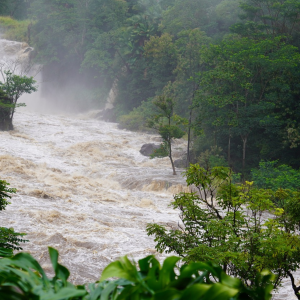
She found herself drawn to questions about water; how it moves through landscapes, how it shapes extremes like floods and droughts, and how those patterns were already changing. Growing up in north India, she had seen those shifts firsthand. “It felt warmer, more humid than when I was a kid.”
That curiosity led her towards hydrology and, eventually, to a PhD opportunity. “I wasn’t initially thinking of a PhD,” she says. But when a PhD opportunity came up that focused on exactly those questions that interested her, and included the chance to work between India and Australia, she decided to go for it.
Finding her way in research
Pallavi started her PhD with no formal research experience. “I felt like a fish thrown into the ocean,” she says. Learning how to define questions, build a research direction, and think independently took time. And confidence.
But slowly, things clicked. Conversations with supervisors and peers, and exposure to the broader climate science community, helped her find her footing. More importantly, they revealed the scale of the climate challenge.
“You realise it’s not just something you read about. It’s a real problem, and I wanted to understand how I could contribute to a positive change.”
By the end of her PhD, she knew she wanted to stay in research. And it was her time with the NESP Climate Systems Hub that reshaped how she thought about that contribution.
From interesting questions to useful ones
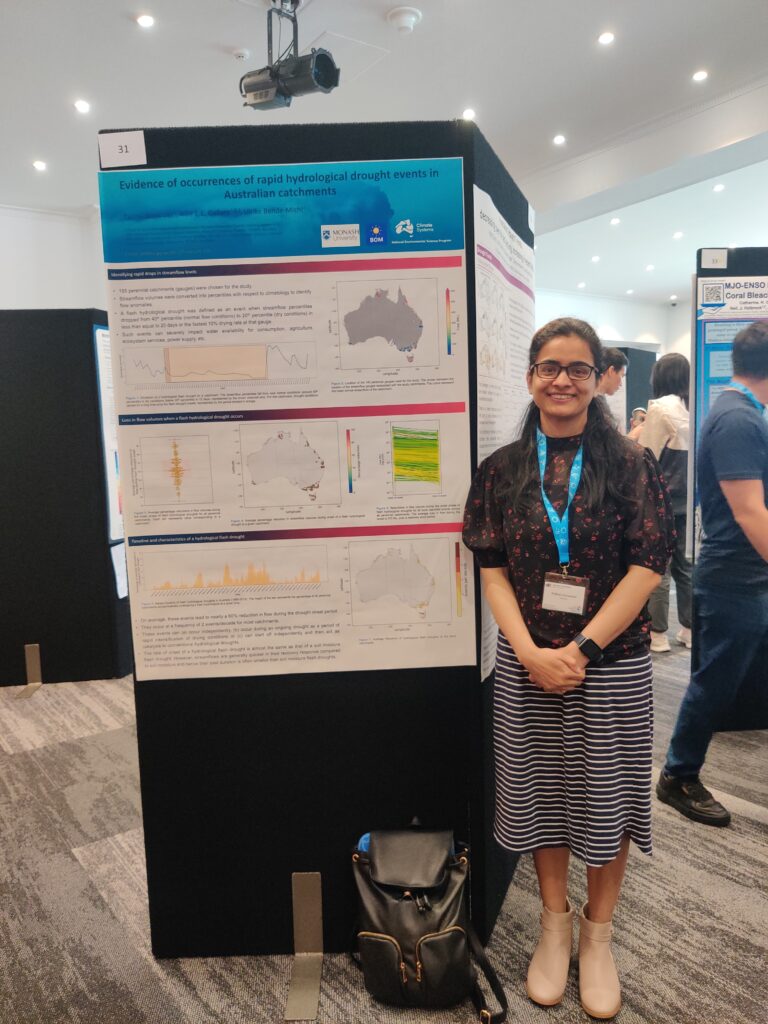
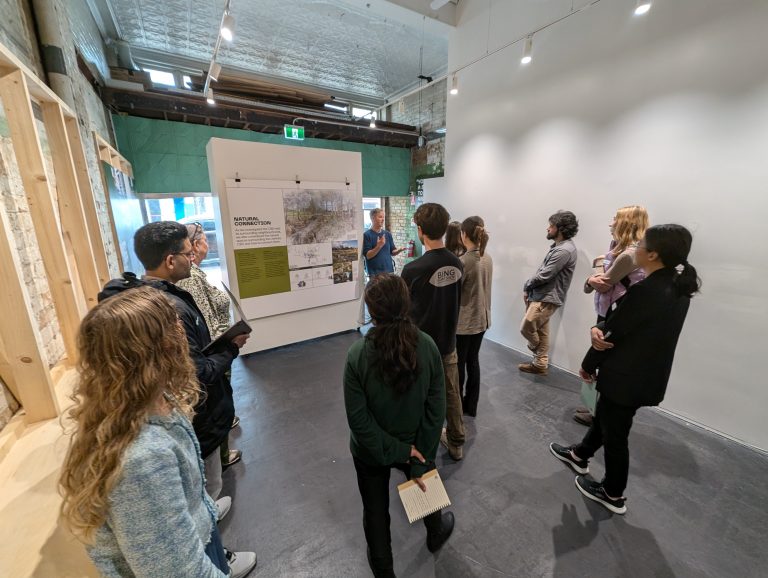
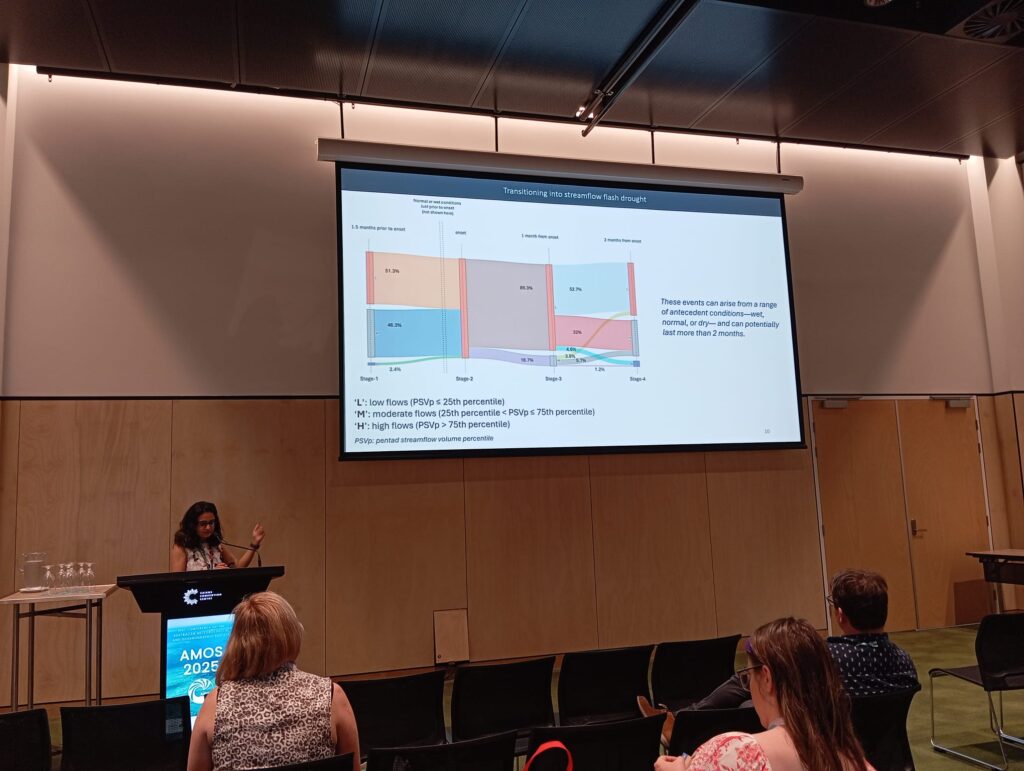
As a postdoctoral researcher with NESP, Pallavi worked on climate extremes, from flash droughts to sudden shifts between drought and intense rainfall. But alongside the science, she was introduced to something new: stakeholder engagement.
“I hadn’t even heard of a knowledge broker before,” she reveals, recalling her first formal encounter with the concept of stakeholder co-designing in NESP.
Building those connections wasn’t straightforward. As an early career researcher, she had to start from scratch, reaching out to senior scientists, making calls, doing introductions, and piecing together a network of potential stakeholders.
“It was challenging… you don’t know where to start, and people don’t always have the time to be involved in the research.”
But the process changed her perspective. “As researchers, we’re often driven by curiosity and questions that we find interesting. But now I also think: is this useful? Who will use this knowledge and how?”
Shifting from curiosity-led to impact-focused work is something she sees as a defining part of her NESP experience.
“I’ll be more satisfied if I can see my research making a difference.”
Seeing beyond the data
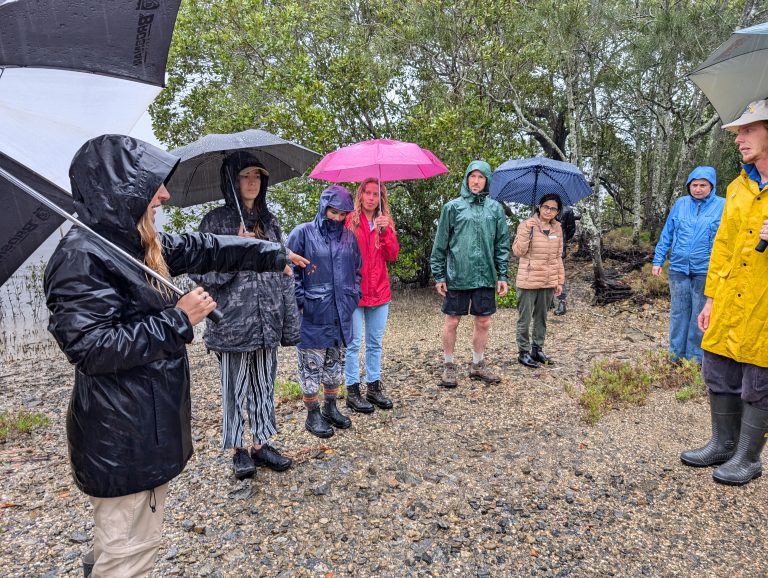
One of the most impactful experiences came through Climate College, when Pallavi joined a field trip to the Northern Rivers following major flooding.
Standing in Lismore, seeing watermarks metres high on buildings, and hearing directly from people affected, brought a different dimension to her work.
“As a researcher, I look at numbers and probability,” she says. “But on that trip, we were listening to people’s lived experiences.”
She remembers one moment in particular, a community member breaking down while recounting what they had been through. “There was silence in the room. It was very real.”
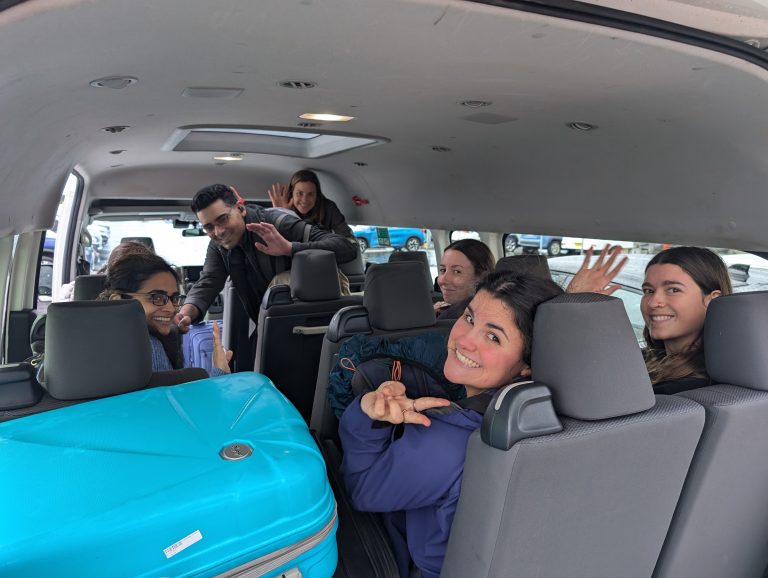
The trip brought together early career researchers from across disciplines, creating space for deeper, more sustained conversations. “We were all looking at the same problem, but from different perspectives, based on our individual expertise. That was not something many of us were used to usually doing, often working in our own silos”.
Taking it forward
Today, Pallavi is based at the UK Centre for Ecology & Hydrology near Oxford, continuing her work on climate extremes and how they may change in a warming world.
She’s still driven by curiosity, and that now it sits alongside a clear sense of purpose.
“Being part of NESP was extremely valuable,” she says. “It made me think about how the knowledge from my work could be used more meaningfully.”
From moving cities and countries, to finding her place in research, Pallavi’s journey hasn’t followed a straight line. But each step from Mumbai to Melbourne to Oxford has brought her closer to the kind of science she wants to do.
Science that not only asks good questions, but answers the ones that matter.