September 18, 2026
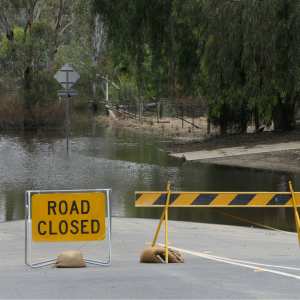
The second in our rainfall series, this next webinar presents the latest research from the NESP Climate Systems Hub on extreme precipitation, focusing not just on how much rain falls, but how quickly it falls. The results indicate that intense, short-burst downpours are generally becoming more frequent and more intense. This has significant implications for water utilities, engineers and councils as they design and manage local roads, drainage and stormwater systems.
This ‘sub-hourly extreme precipitation’ project is an international collaboration. Under the CORDEX global partnership, it brings together climate scientists across Australia, New Zealand and Switzerland as they consider station observations and reanalysis data of past ‘sub-hourly extreme precipitation’ events, together with high resolution convection permitting simulations to understand future changes in these events.
Tuesday 6 October, 1 – 2pm (AEDT)
Join us as project lead Jason Evans shares details of the project and its key findings across nine major cities. We’ll then hear from Rory Nathan, Professor of Hydrology and Water Resources at University of Melbourne as he explains the application of this research and why it’s so important for urban infrastructure design and planning.
Hosted by NESP Climate Systems Hub Knowledge Broker Ramona Dalla Pozza, speakers include:

Professor Jason Evans
I am a Professor at the Climate Change Research Centre at the University of New South Wales. My research is focused on understanding regional climate phenomena including climate hazards. My work improves how we model these phenomena in regional climate models, and using these models to project how they will change in a future warmer climate. I also investigate general issues of water cycle processes over land, and how we can change them, largely through changes in land use and changes in climate. I focus at the regional (or watershed) scale and study processes including river flow, evaporation/transpiration, water vapour transport and precipitation.
I hold international leadership positions in the field including Co-Chair of the Global Energy and Water Exchanges (GEWEX) program of the World Climate Research Programmes (WCRP). I am Co-Chair of the Sub-Hourly Extreme Precipitation (SHEP) project investigating how sub-hourly rainfall extremes will change as the climate changes. I am also Co-Chair of the Island Climate – Pacific (IC-Pac) project that aims to create high resolution future climate projections for the Pacific region and use these to understand the climate change risks in the region. SHEP and IC-Pac are both Flagship Pilot Studies within the Coordinated Regional Climate Downscaling Experiment (CORDEX).

Professor Rory Nathan
Professor Rory Nathan is a hydrologist who has focussed much of his career in industry evaluating flood risk for public and private sectors. He is co-editor and leading author of the Australian national flood guidelines, and he has undertaken many expert advisory and review roles for government, legal, and private entities. He has published over 300 papers in refereed journals and conference proceedings, where his research at the University of Melbourne is focussed on the impacts of climate change on floods and environmental systems. In 2000 he was recognised as national “Civil Engineer of the Year” by Engineers Australia, and as the 2018 Munro Orator he is recognised as being one of Australia’s most influential engineers eminent in the field of water resources