
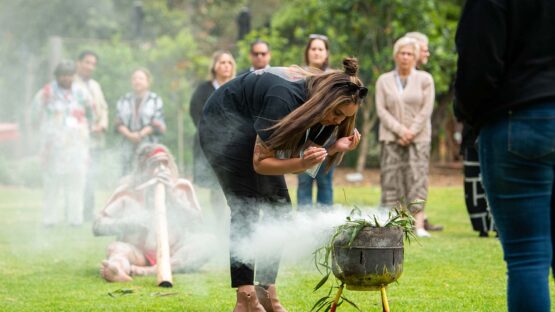
The National First Peoples Platform on Climate Change provides an Indigenous‑led, culturally grounded forum guiding the Climate Systems Hub’s work on climate science, adaptation and resilience. Supported by a Steering Committee of endorsed Traditional Owners, the Platform ensures that climate research is shaped through First Peoples leadership, co‑design principles, and culturally safe engagement, including adherence to Free, Prior and Informed Consent (FPIC) and Indigenous Cultural and Intellectual Property (ICIP).
Its role is to advise on research priorities, support ethical and culturally appropriate project development, build relationships between Indigenous communities and climate researchers, and strengthen the integration of Indigenous knowledge systems in understanding and responding to climate change.
Through this Platform, First Peoples’ voices, rights and knowledge guide national climate research in ways that honour Country, culture and community, and help ensure meaningful, practical outcomes for the challenges ahead.
Current committee members are:

Jason Wilson, Co-Chair
An Aboriginal man (Murri) of the Kennedy-Morgan and Peter’s Families. His Grandfather’s country language is Gomilaroi (Barwon River and North-west NSW), and his grandmother’s Country language is Youalaroi (Narran River and North-west NSW). The primary objective of his past and present work is to incorporate Aboriginal Values into water initiatives within the Commonwealth and NSW Governments. He has dedicated his life to stopping the ‘intergenerational cultural, spiritual and economic genocide’ and providing equity for his people.

Bianca McNeair, Co-Chair
A Malgana woman from Gutharagudu (Shark Bay) whose work caring for Sea Country has spanned several different cultural, conservation and political roles. She is an artist, and has also worked in ranger programs and in the co-design of Women’s Loggerhead Turtle and seagrass restoration projects in Western Australia, linking scientists, traditional owners and the local community. Bianca is passionate about elevating the voices of Aboriginal Women caring for country in international climate policy spaces, attending COP29 and COP30.

Lance Syme
A proud Wiradjuri man. He is an experienced Indigenous heritage and governance specialist with extensive work across cultural heritage management, environmental assessment, and international heritage policy, including long-standing engagement with UNESCO World Heritage and United Nations Indigenous mechanisms. Lance currently serves as Secretariat of the International Indigenous Peoples’ Forum on World Heritage and has represented Australia in international heritage processes.

Hilda Mosby
A Masig Island Traditional Owner. Ms Mosby has more than 20 years of experience as a Biosecurity Officer in the Australian Public Service and was employed as Senior Housing Officer for the Torres Strait Island Regional Council. Of key concern to Ms Mosby is the impact of coastal erosion on low-lying Torres Strait communities, including her own community. She will advocate for an integrated approach to address coastal erosion issues by the relevant Australian Government and Queensland Government agencies. Ms Mosby is also passionate about the preservation of Torres Strait culture through language, music and art.

Glen Wingfield
A Kokotha/Arabana man from South Australia, and is a respected Indigenous leader with over 20 years in the mining industry and a strong commitment to Aboriginal heritage protection. He co-chaired the National First Peoples Platform on Climate Change from 2023 to 2025 and also serves as SA Community Coordinator for the First Nations Clean Energy Network.

Sonia Cooper
A proud Yorta Yorta woman, raised by her grandmother on Cummeragunja, NSW. Deeply connected to her culture, Sonia lives and works on Country, dedicating her career to a rights-based approach and the intersection of various protections, but extends that knowledge to bring others on the journey. Her focus includes cultural law, water law, chemical science, and assessing cultural impacts. Sonia is committed to challenging conventional thinking and invites all those who wish to yarn.

Richard Sporne
Richard Sporne is a proud Wadja, Ghungalu and Gurang Gurang man from Central Queensland with more than 20 years of experience in community development, engagement, and strategic project delivery across Australia. He is the Director of First Nations Strategy & Engagement at Greening Australia, where he leads national initiatives focused on innovation transfer and the establishment of consistent standards in Indigenous partnerships across carbon, restoration, and other conservation and environmental projects.
Richard also serves as a Native Title applicant for the Wadja People and holds several key leadership positions, including with the Wadja Indigenous Protected Area project, the Fitzroy Catchment Traditional Owners Alliance, Queensland Water and Land Carers, and Team Indigenous Corporation.
The Platform works with the NESP Climate Systems Hub to provide advice and guidance on developing the research agenda, developing culturally appropriate projects established under the principles of Free, Prior and Informed Consent and Indigenous Cultural and Intellectual Property (ICIP) on climate change.
The Steering Committee provides advice and guidance to the Climate Systems Hub in line with the co-design principles, in collaboration with the Indigenous Facilitator and partnerships team, to:
- ensure projects in the Hub’s Research Plans are implemented in ways that are ethical and culturally appropriate
- provide guidance, as appropriate, on ICIP and Free, Prior and Informed Consent and co-development of relevant projects for the Cultural Safety of First Peoples
- develop and implement a National First Peoples Gathering on Climate Change
- identify opportunities to include Indigenous people and communities in Hub science projects.
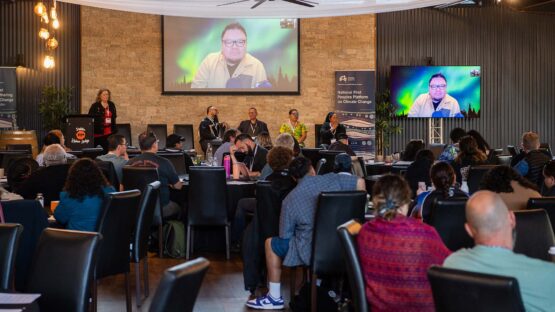
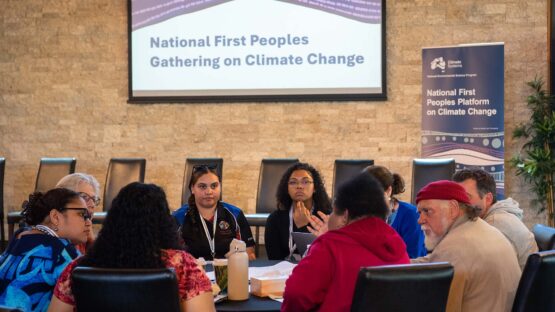
One of the most prominent efforts of the National First Peoples Platform on Climate Change has been the National First Peoples Gatherings on Climate Change.