Location: National
Indigenous lead: Damian Morgan-Bulled, Indigenous Partnerships Team
Team members: Mandy Hopkins and Shannon Clohessy, Indigenous Partnerships Team, Brad Murphy, NESP Climate Systems Hub, and Sonia Cooper, Yorta Yorta
What we’re doing
This case study strengthens the governance structures that protect Indigenous rights in this project. It ensures Indigenous communities have control over their participation during the project – from concept to completion – by upholding Free, Prior, and Informed Consent (FPIC), and protecting Indigenous Cultural and Intellectual Property (ICIP) rights.
Why it matters
Ethical engagement with First Nations communities is essential for respectful and effective collaboration. This case study will create frameworks that honour Indigenous leadership and knowledge.
What we’ve found
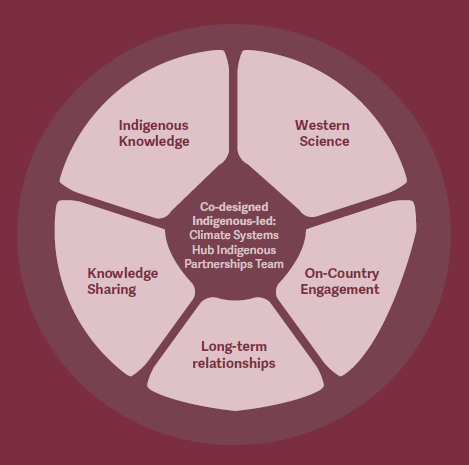
The Indigenous Partnerships Team supports respectful, long-term partnerships through co-designed, Indigenous-led approaches. The team also supports the National First Peoples Platform on Climate Change, which helps guide research priorities, cultural protocols and ethical engagement across the Hub.
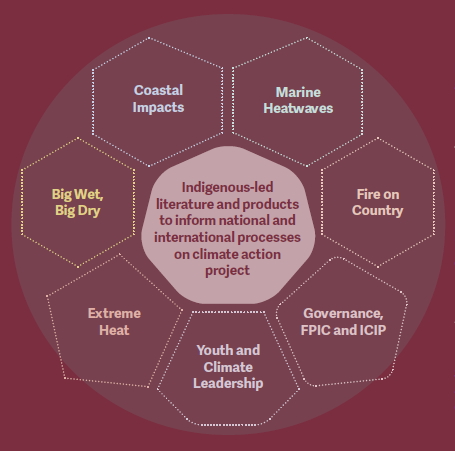
Informing climate at all levels
Informs national and international climate processes, including the Intergovernmental Panel on Climate Change (IPCC)
Supports strong adaptation, resilience and community-led solutions
Culturally respectful and Indigenous-led governance
All activities conducted by the Indigenous Partnerships Team, including the Indigenous-led literature and products project, follow culturally safe and community-led governance approaches, informed by:
| FREE, PRIOR, AND INFORMED CONSENT (FPIC) | INDIGENOUS INTELLECTUAL AND CULTURAL PROPERTY (ICIP) |
| Ensures Indigenous communities: Have the right to give or withhold consent Are involved early in project planning and decision-making Receive clear and accessible information Participate through culturally appropriate processes | Protects the rights of First Nations People to: Control how cultural knowledge is shared and used Protect cultural knowledge, stories, language and data Ensure cultural knowledge is respected and not misused Guide how knowledge is stored, attributed and accessed |
Weaving knowledge systems for climate resilience
By bringing Indigenous knowledge together with climate science, the Climate Systems Hub supports:
- more locally relevant climate knowledge stronger adaptation planning and decision-making
- Indigenous participation and leadership in climate science and policy
- contributions to national and international climate processes, including the IPCC.
Back to Project 5.10 Indigenous-led literature and products to inform national and international processes on climate action