March 12, 2026
Held in Tasmania, where Australia meets the vast Southern Ocean and looks towards Antarctica, AMOS 2026 was a week focused on transformation. This year’s theme was all about the spaces between: between weather and climate, land and ocean, science and people. Throughout the conference the NESP Climate Systems Hub was everywhere, leading, contributing, connecting, and showing how collaborative science can guide Australia through a rapidly changing climate.
We were proud to see 35 abstracts submitted by hub researchers across the program, with many hub members chairing sessions and presenting their work via posters, our biggest collective presence yet. From climate variability to ocean processes, extremes and impacts, hub science was threaded throughout the week and left lasting impressions.
And we didn’t just contribute, we helped shape the direction of the conference.
Our Hub Lead, leading the way
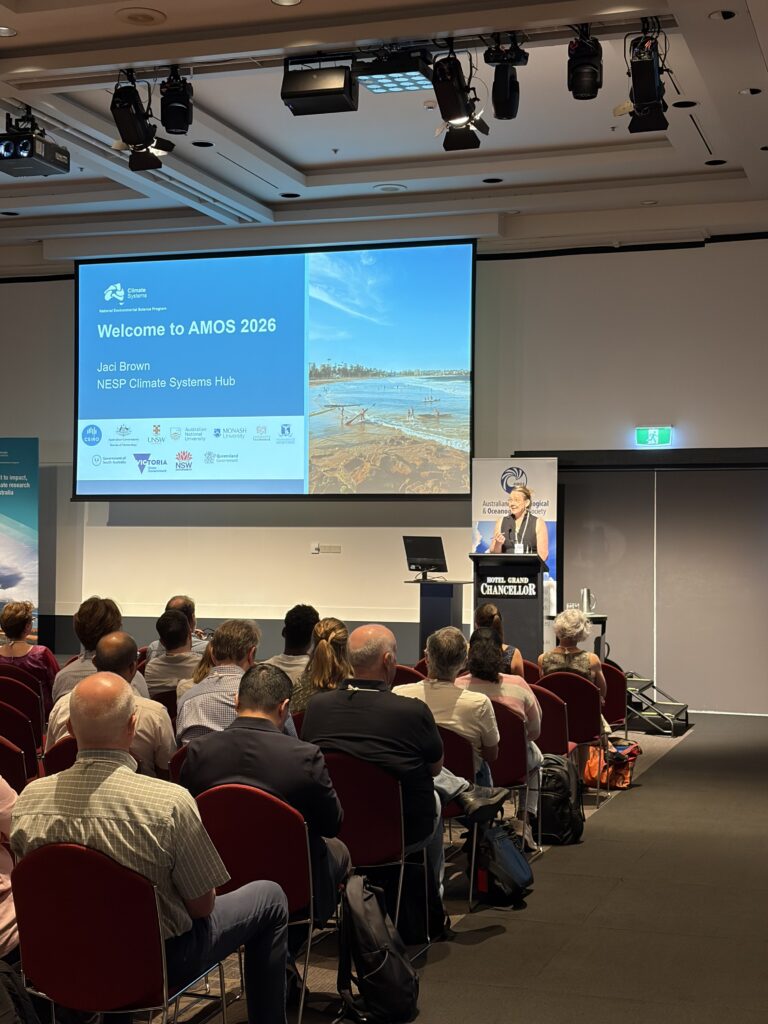
Hub Lead, Dr Jaci Brown, set the tone for the event with the opening speech and morning plenary. She welcomed attendees by reflecting on why conferences like AMOS matter so deeply to the climate and weather community.
Jaci spoke about the unique position of the NESP Climate Systems Hub, a partnership spanning DCCEEW, CSIRO, the Bureau of Meteorology, UTAS, University of Melbourne, ANU, UNSW, Monash University, and state governments. With research ranging from climate modelling to adaptation, co-design, and Indigenous engagement, she highlighted why AMOS is such a critical gathering point in all of this.
“We are human,” she reminded the room. “Face‑to‑face interactions build trust and community—and that’s how we operate best.”
Knowledge Brokers bringing co-design to life
Co-design seemed like a buzzword at AMOS 2026, and for good reason. While it’s easy to talk about, genuine co-design means shaping research with the people who will use it. It takes time, trust, iteration, and the right partnerships. All this work leads to science that genuinely supports real-world decisions.
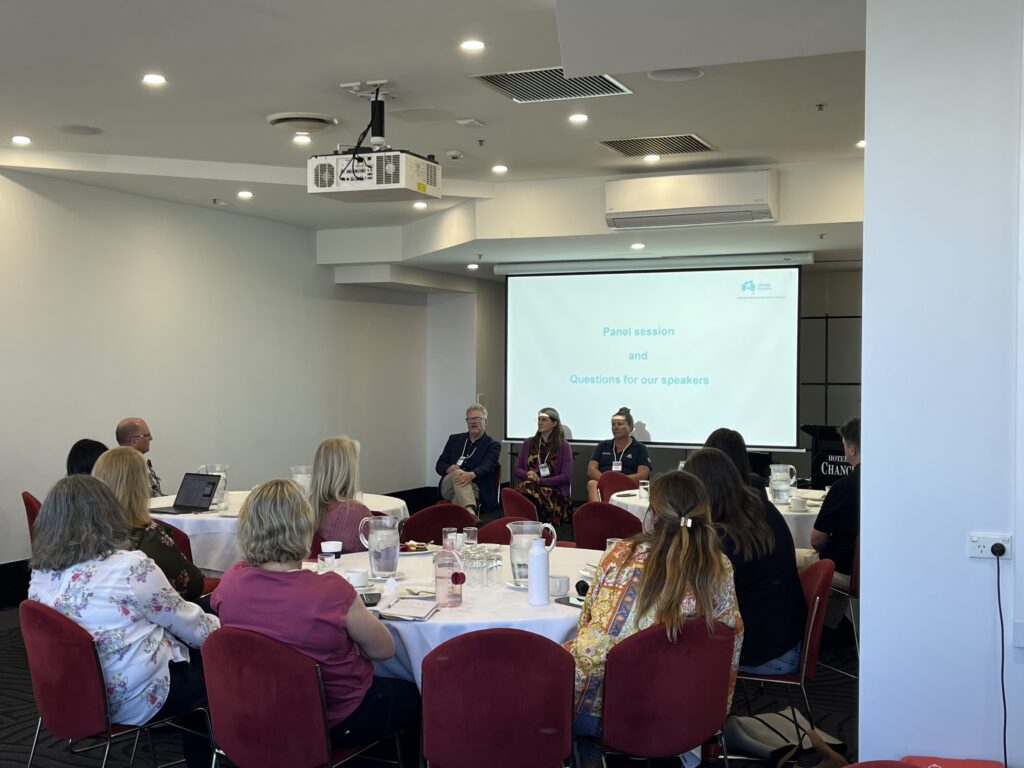
Our Knowledge Broker team hosted a workshop that brought this to life. Together, they showed how strong partnerships, established processes, and the right people at the table can transform a project.
Frances Seaborn, Marine Fisheries Manager from the Department of Natural Resources and Environment Tasmania, spoke about the collaborative work behind Tasmania’s first Marine Heatwaves and Related Event Response Plan, highlighting how essential it was to involve industry, community, and subject matter experts early.
Professor Neil Holbrook, hub researcher and Marine Heatwaves project lead, reflected on how stakeholder involvement throughout the project reshaped the research itself. The analysis, outputs, and focus shifted as new insights emerged from those who would ultimately rely on the science.
Dr Acacia Pepler, hub researcher and Extreme Rainfall project lead, emphasised that co-design succeeds or fails in relationships. Finding the right partner is key, and building trust doesn’t happen overnight. She underscored how the hub’s knowledge broker network helped connect the project with local knowledge, additional datasets, and expertise that enriched the research and outcomes.
Participants left the session with a clearer understanding of why co-design isn’t a “nice to have”; it’s key to decision-ready science. This included the realisation of some of the challenges co-design brings, such as the need to invest time and resources in early and ongoing engagement with decision-makers. Read more about the process in the hub’s co-design guide.
Indigenous-led plenary
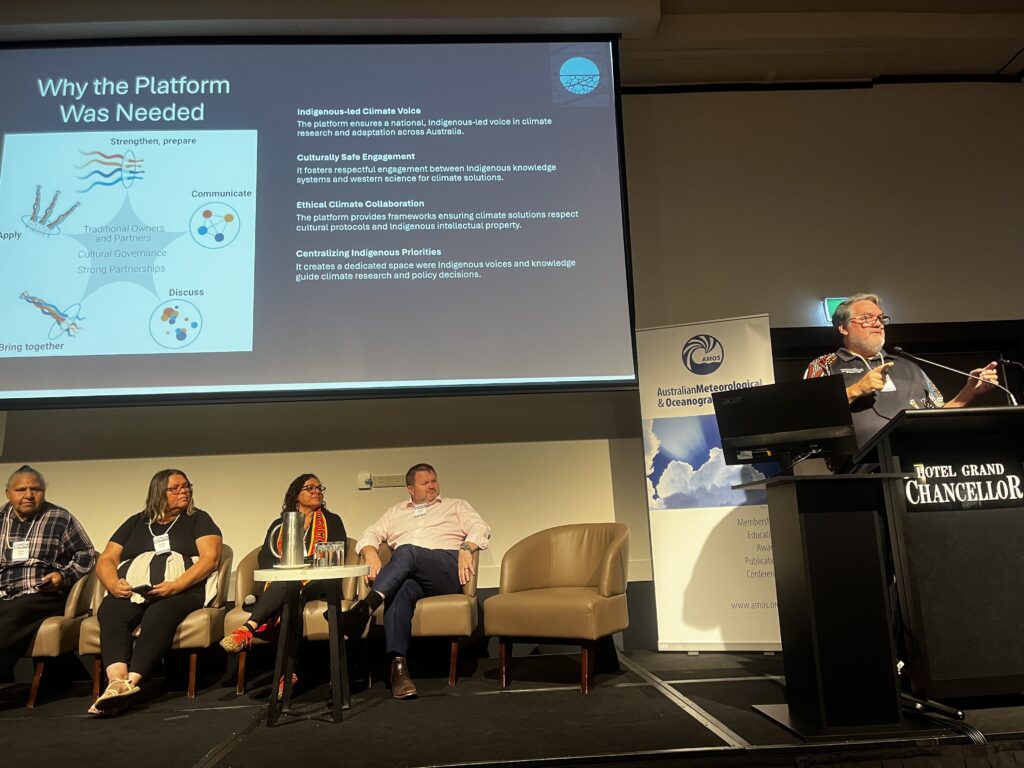
The final day featured an Indigenous-led and focused plenary, presented by members of the First Peoples Platform on Climate Change with support from our Indigenous Partnerships Team.
The plenary was powerful. It centred First Nations voices, knowledge systems, and leadership, showing that climate resilience and adaptation cannot be achieved without Indigenous governance, connection, and science.
This was not only a milestone for AMOS, but a moment of cultural grounding for the entire conference and attending audience.
Following the plenary, the Indigenous Partnerships Team and contributors presented on hub Indigenous-led literature and products to inform national and international processes on climate action, sharing progress across all its case studies. This session demonstrated how partnership between Western science and Indigenous knowledge deepens the insights needed to care for Country, inform national policy, and support communities across Australia.
The message was clear: climate action is strongest when it draws from both knowledge systems, equally and respectfully.
Looking ahead
Throughout the week, what really stood out were the presentations, workshops, and hallway conversations. Moments where people came together to exchange ideas, challenge assumptions, and make plans for future work.
Although AMOS shows us the challenges we face are significant, our collective capacity to address them continues to grow. Hub researchers, Knowledge Brokers, and the Indigenous Partnerships Team all demonstrated what’s possible when science is connected to people, place, and purpose.
Here’s to continuing to build those connections in 2026 and beyond.
Interested in learning more about the hub’s work? Be sure to check out our current and past research projects and more.