December 18, 2025
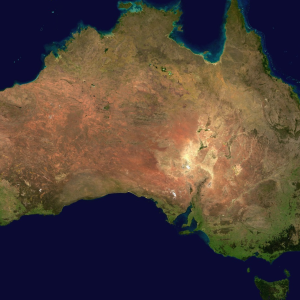
When you think about global climate science, it’s easy to assume the playing field has always been level. But the truth is, research institutions in the Northern Hemisphere had a head start. Their infrastructure, funding, and long-established networks meant that for decades, much of the world’s climate knowledge was shaped by northern perspectives. Meanwhile, the Southern Hemisphere, home to vast oceans, unique weather systems, and critical climate drivers, was catching up.
That catch-up phase has been transformative. The first major synthesis of Southern Hemisphere meteorology appeared in 1972, a seminal text that put this region on the scientific map. A second edition in 1998, led by David Karoly, updated the field with new insights. Now, nearly three decades later, Meteorology and Climate of the Southern Hemisphere (Cambridge University Press) represents the most comprehensive resource yet, bringing together over 100 experts from 22 countries to consolidate what we’ve learned and chart the way forward. Edited by NESP’s own Dr Andréa S. Taschetto from UNSW, this book includes contributions from other NESP researchers including Dr Sugata Narsey, Dr Christine Chung, Dr Ghyslaine Boschat, Dr Acacia Pepler, Dr Eun-Pa Lim, Dr Zoe Gillet, and Dr Matthew Wheeler from the BOM, Dr Hamish Ramsey, Dr James S Risbey, Dr Didier Monselesan, Dr Carly Tozer, and Dr Guojian Wang from CSIRO, Dr Andrew King and Dr David Karoly from UoM, and Dr Jason Evans from UNSW, and Dr Savin Chand from Federation University.
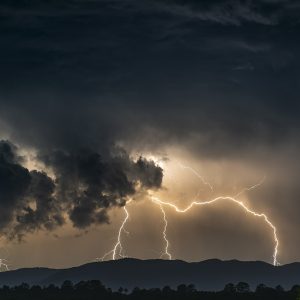
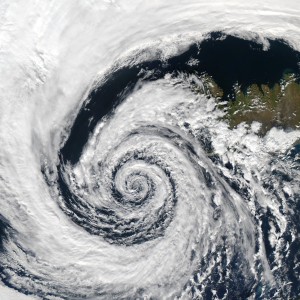
Why does this matter? Because foundational science is the bedrock of informed decisions. This book doesn’t just describe atmospheric circulation or ocean dynamics for the sake of theory. It explains weather patterns and phenomena like El Niño–Southern Oscillation, the Indian Ocean Dipole, and the Southern Annular Mode, drivers that shape rainfall, temperature, and storm patterns across Australia. These insights are essential for understanding extreme events, managing water security, and planning for a warming world.
Over the past 30 years, advances in satellite technology, radar systems, and high-resolution climate models have revolutionized our understanding of Southern Hemisphere systems. We now have decades of additional observations and improved theoretical frameworks that allow us to move from ‘what’s happening?’ to ‘what’s next?’ That shift is critical for governments, industries, and communities making decisions under climate uncertainty.
And this is where the value chain comes in. Foundational research feeds directly into practical strategies, like local councils planning for flood risk or managing water security, or state agencies relying on long-term climate projections for bushfire preparedness.
As this new edition launches, it’s more than a book. It’s a signal of maturity in Southern Hemisphere meteorology and climate science, a field that has moved from catching up to leading innovation. For researchers, it’s an indispensable reference. For decision-makers, it’s the often unseen foundation behind every strategy to protect lives, infrastructure, and ecosystems in a changing climate.